
20+
Years Of Experience
Cooling Systems Matched to What Your Property Needs
A/C Installation in Hill City for homes and businesses without existing cooling, replacing discontinued systems, or adding capacity to underserved areas
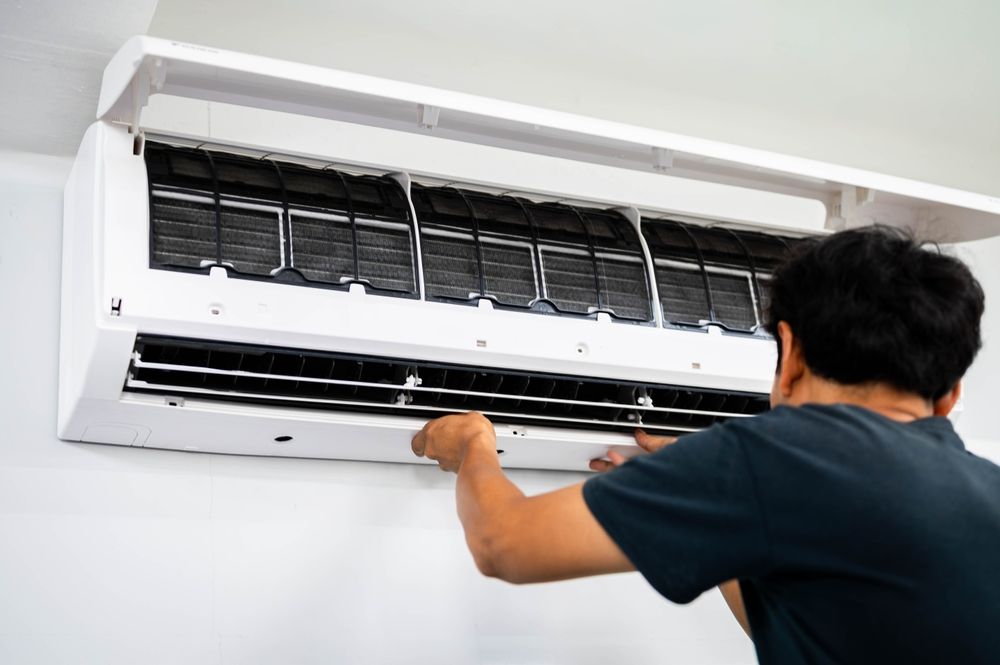
What changes after a correctly installed air conditioning system is commissioned isn't subtle: rooms that previously became unusable in warm months hold stable temperatures, humidity drops to a range where it's no longer noticeable, and the system does this without the short-cycling or uneven distribution that come from an improperly sized unit. BeeCool 24/7 HVAC performs A/C installation for homes and businesses in Hill City, and the process starts with load calculation rather than equipment selection—because the right unit size depends on the specific space, not a square footage rule of thumb. Installing equipment that's too large cools the space quickly but fails to run long enough to control humidity, while undersized equipment runs constantly without reaching setpoint.
The installation sequence involves evaluating the existing duct system for compatibility with the new equipment's airflow requirements, selecting refrigerant line routing that minimizes bends and pressure drop, and confirming that the electrical service at the panel can support the new unit's startup amperage. In Hill City's mix of older cabins, single-family homes, and commercial buildings, duct conditions vary widely—some properties need duct sealing or minor reconfiguration before a new system will perform as specified.
Request an installation estimate from BeeCool 24/7 HVAC by calling (218) 360-9789 to discuss your property's layout and cooling requirements.
The Difference Between Correct and Rushed A/C Installation
A/C installation done correctly involves commissioning steps that happen after the physical equipment is in place: verifying refrigerant charge by measuring superheat and subcooling rather than estimating, confirming static pressure in the duct system to validate airflow, and testing the thermostat's response to actual equipment behavior rather than just confirming it powers on. These steps are what separate a system that performs at rated efficiency from one that runs but never quite satisfies.
Once installation is complete and the system is running under load, the performance should be measurable: supply air temperature at registers should be a specific number of degrees below return air temperature, all zones should receive airflow at expected volume, and the system should reach setpoint and cycle off cleanly. Any deviation from these indicators points to an installation step that wasn't completed correctly and should be addressed before the equipment is considered commissioned.
Installation also includes decisions about condensate drainage, particularly for systems installed in finished basements or interior mechanical rooms where a drain pan overflow could cause property damage. These are decisions made during installation planning, not after the equipment is already mounted—and they're part of what BeeCool 24/7 HVAC reviews with customers before work begins.
Questions Before Starting Your A/C Installation
These questions address the installation process itself—what happens during the work, what decisions are made, and what property owners should know before scheduling.
How is the correct size A/C system determined for a specific property?
Equipment sizing is determined through a Manual J load calculation, which accounts for the home's square footage, ceiling height, window area and orientation, insulation levels, and internal heat sources. Relying on the size of the unit being replaced is a common shortcut that perpetuates the original specification error if the previous system was itself incorrectly sized.
What happens to existing ductwork during a new A/C installation?
The technician evaluates duct condition, checks for leaks at joints and connections, and measures static pressure to confirm the duct system can handle the new unit's airflow. In Hill City properties built before modern duct sealing standards, it's common to find enough air loss at duct seams to meaningfully reduce system efficiency even with new equipment installed.
How is refrigerant line routing handled during installation?
Lines are run to minimize total length and avoid sharp bends that increase pressure drop, then insulated to prevent heat gain on the suction line. Improper line routing is one of the most common installation shortcuts and directly reduces system efficiency and compressor longevity.
What electrical checks are required before an A/C unit is installed?
The panel is evaluated for available circuit capacity and the ability to handle the unit's minimum circuit ampacity and maximum overcurrent protection as listed on the equipment nameplate. If the existing service isn't adequate, the electrical work is addressed before equipment installation, not after.
How do you verify an A/C installation was completed correctly?
After commissioning, verify that supply air at registers is measurably cooler than return air—typically 15 to 20 degrees of temperature split under normal load conditions—and that the system reaches setpoint and cycles off cleanly without short-cycling. These are the observable indicators that the installation was completed to specification.
BeeCool 24/7 HVAC installs air conditioning systems in Hill City for both residential and commercial properties—call (218) 360-9789 to discuss your property's layout and get an estimate for the work.