
20+
Years Of Experience
Preventive Service Before Problems Develop
HVAC maintenance in Hill City for heating and cooling systems showing reduced efficiency or approaching seasonal demand periods
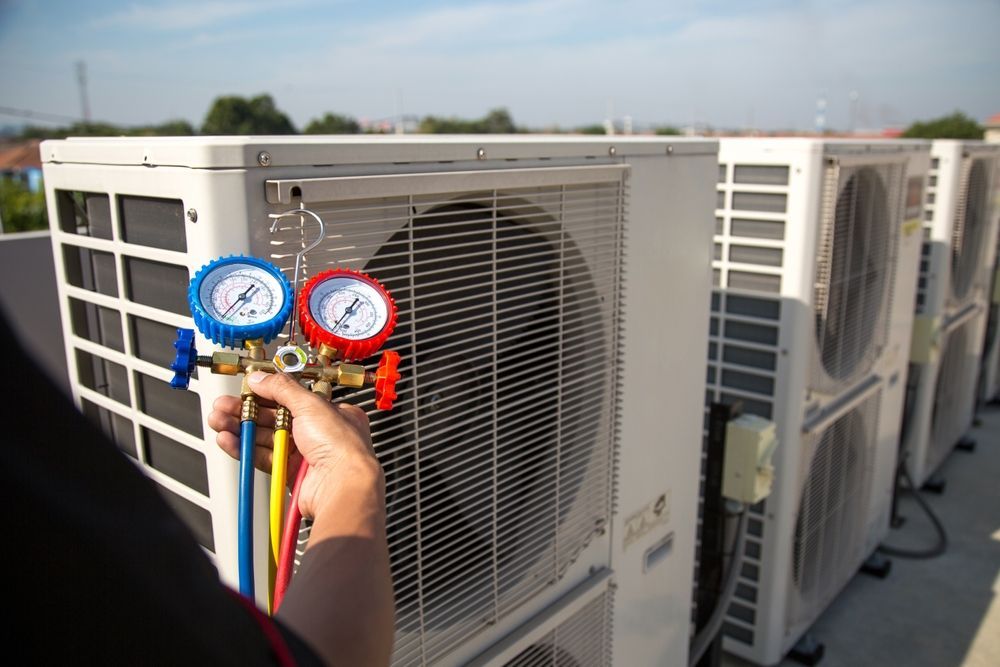
Deferred maintenance on HVAC equipment does not produce a gradual decline—it tends to produce sudden failures at the worst possible moment, when systems are under the most sustained load. BeeCool 24/7 HVAC provides scheduled preventive maintenance for heating and cooling systems throughout Hill City, covering seasonal inspections, equipment cleaning, airflow verification, and early identification of components showing wear before they cause an unplanned shutdown.
A maintenance visit covers the full system rather than a single component check. On the heating side, that includes inspecting the heat exchanger for cracks or fatigue, verifying ignition components, checking the flue and venting path, measuring temperature rise, testing limit and safety switches, and cleaning burners and the blower assembly. On the cooling side, coil condition, refrigerant charge, drain line clearance, and capacitor health are all evaluated. Airflow through the system is measured and compared against the equipment's design specifications, because restricted airflow is one of the most common contributors to both efficiency loss and premature equipment failure.
Schedule a maintenance appointment with BeeCool 24/7 HVAC to have your system evaluated before the next high-demand period arrives.
What Consistent Maintenance Actually Accomplishes
Cleaning and inspecting HVAC equipment on a regular schedule catches developing problems at a stage where correction is straightforward. A failing capacitor identified during a maintenance visit is a low-cost replacement made at a convenient time; the same capacitor failing during peak summer or deep winter means an emergency call, possible secondary damage to the compressor or blower motor, and a longer wait for service. Flame sensors, igniter rods, and pressure switch hoses all degrade predictably, and a maintenance inspection provides a current picture of where each component sits in its service life.
After a completed maintenance service, the system operates with confirmed airflow, clean heat transfer surfaces, and verified safety control function. What you notice is that the system reaches setpoint more consistently, cycling more cleanly without extended run times that suggest it is working harder than necessary to move conditioned air through partially blocked coils or a restricted filter housing. BeeCool 24/7 HVAC documents the condition of components inspected so there is a clear reference point for the next service interval.
Many properties in Hill City rely on forced-air systems that run for substantial portions of the year given how long both heating and cooling seasons extend in this region—which means those systems accumulate operating hours faster than equipment in more moderate climates, making consistent maintenance intervals more consequential here than they would be for equipment that runs fewer months per year. The maintenance schedule and what is included in each visit can be adjusted based on equipment age and the findings from prior service visits.
What Property Owners Ask About the Work
HVAC maintenance questions typically focus on what is inspected, why certain checks matter, and what gets addressed during a visit versus what falls outside routine maintenance scope. The following answers reflect how the work is actually performed.
What does an airflow check during maintenance involve?
Airflow is measured at supply registers and compared against the system's rated capacity, and static pressure across the air handler is tested to identify restrictions caused by dirty coils, undersized ductwork, or a clogged filter housing that is impeding the blower's ability to move air at design specifications.
How is heat exchanger condition evaluated during a furnace maintenance visit?
The heat exchanger is visually inspected with lighting and in some cases a mirror or camera for cracks, stress marks, or corrosion, and the system is observed during operation to check for flame disturbance that can indicate airflow from a breach—both methods are used because visual inspection alone does not always reveal developing cracks.
Why does blower assembly cleaning matter for system efficiency?
Dust and debris accumulate on blower wheel blades over time, reducing the wheel's ability to move air and causing the motor to draw more amperage to maintain the same output—cleaning the assembly restores airflow capacity and reduces motor load, which affects both operating efficiency and motor service life.
When should capacitor condition be checked as part of maintenance?
Capacitors are tested for microfarad rating during each maintenance visit because they degrade gradually and measure within spec until they fail abruptly—catching a capacitor at the low end of its rated tolerance during a planned visit allows for replacement before it causes a no-start condition on a compressor or blower motor.
What is included in a maintenance visit versus what requires a separate repair call?
Maintenance visits include inspection, cleaning, testing, and adjustment of components within normal operating condition; components identified as failed or outside specification are documented and addressed through a repair, which may be completed during the same visit or scheduled separately depending on parts availability.
BeeCool 24/7 HVAC provides HVAC maintenance for residential and commercial properties in Hill City—arrange a service visit to get a documented condition report on your heating and cooling equipment before the next seasonal demand period. BeeCool 24/7 HVAC also provides HVAC maintenance in Grand Rapids, Aitkin, Garrison, and Onamia.